
The Plant-Based Plateau in Practice

What Vegan Food on the Road Reveals About Access, Nutrition, and Added Friction
The Plant-Based Plateau looked at why plant-based food has had such a hard time moving from an alternative choice to an ordinary one. Better products, stronger evidence, and wider availability all matter, but they are not enough on their own. Plant-based food also has to fit into everyday life, feel satisfying, and be just as convenient to choose as the animal-based options around it [1].
Travel makes it easier to see whether that support is really there. At home, a stocked kitchen, familiar grocery stores, and trusted restaurants can make up for what is missing. On the road, everything depends on where restaurants are located, when they are open, what appears on the menu, how well the staff understands vegan requests, and what the kitchen treats as the default.
A recent road trip through Northern California and Oregon passed through communities generally seen as open to plant-based eating. Options were more common than they would have been several years ago, and some meals were genuinely excellent. Still, having something available was not the same as finding a complete meal that was balanced, appealing, clearly labeled, and prepared correctly.
The progress was clear, but the inconsistency and extra effort showed that this way of eating was still not fully normalized.
The Building Blocks Are Already There
The encouraging part was that vegan dining was no longer starting from zero. Much of what restaurants needed to make the experience better was already in place.
Vegan Options More Widespread. Vegan food was offered in most places, including conventional restaurants, and it often went beyond a basic salad. Many kitchens already stocked plant milk, veggie patties, vegan cheese, and other ingredients that gave them more to work with.
Traditional Plant Proteins Featured. Tofu and tempeh were the most dependable vegan protein sources along the route. Their prominence reflected growing interest in whole plant foods over highly processed meat alternatives [2].
Fiber Remained Strong. Whole grains, legumes, and vegetables kept fiber on the plate. This was especially relevant amid “fibermaxxing,” a trend drawing attention to a nutrient most Americans still do not get enough of [3].
Breakfast and Dessert Included. Plant-based venues brought vegan dining into familiar routines and everyday moments of pleasure by making breakfast and dessert real choices. Pancakes, waffles, pastries, and cakes were available without eggs, milk, or butter—the ingredients that usually made them off-limits.
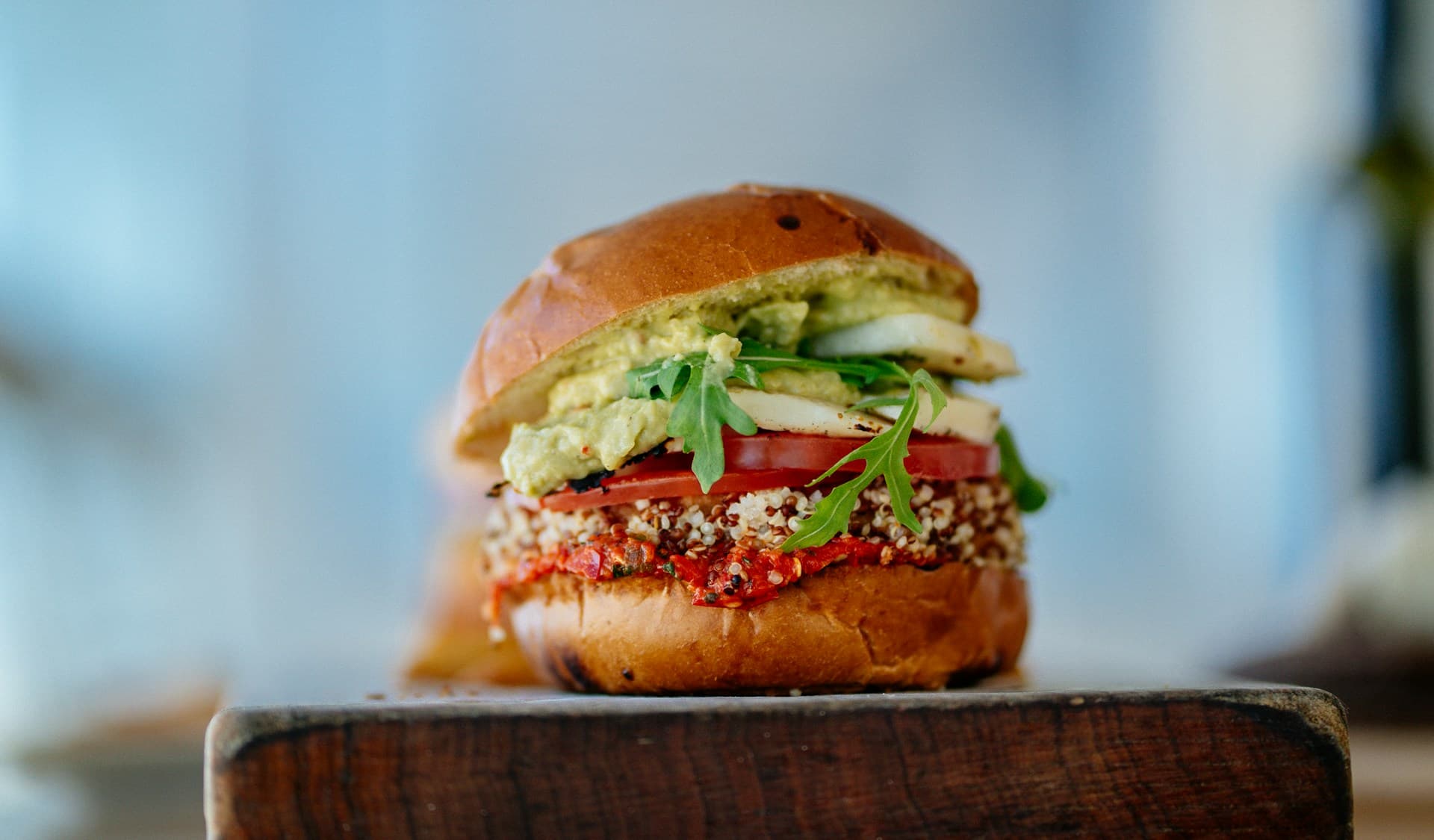
Creative Uses of Plants. One of the most pleasant surprises was how inventive some restaurants were with familiar plant foods. Sunflower seeds became ricotta, quinoa was turned into tempeh, and chickpeas and cashews formed the base of a wholesome veggie burger.
Taken together, these signs showed what vegan dining could offer beyond basic availability: real choice, substance, and possibility.
Where the Plateau Still Holds
The problems showed up in the everyday details of food service: restaurant hours, menu design, recipes, labeling, and staff routines. Each issue might have seemed small on its own, but together they restricted access, weakened meal quality, and required vegan diners to manage a series of exceptions.
Fragile Access to Variety
In many places, having vegan food available did not mean having multiple options. Regular restaurants often provided only a narrow selection, even as a new global hospitality standard calls for a greater share of vegan and predominantly plant-based offerings [4]. The real variety was usually concentrated in dedicated vegan cafés, but access to it was fragile.
Some cafés required a separate drive, many closed by midafternoon, and others were shut one or two days a week. When the café was unavailable, a town that looked vegan-friendly online could leave diners with one modified entrée, a few side dishes, or whatever could be pieced together from the regular menu.
Vegan food existed, but the range depended heavily on timing, location, and a single business being open.
Nutrition as an Afterthought
Many vegan dishes looked familiar, but nutritionally they did not always hold up. Eggs, dairy, or meat were replaced with lower-protein alternatives or removed altogether, with nothing added to compensate. The result was often a meal high in carbohydrates and added fat but low in protein, a concern given the association between higher intake of this key nutrient and greater fullness [5].
Research suggests this is part of a broader pattern, with vegan restaurant dishes tending to contain substantially less protein than meat-based ones [6].
The shortfall extended across the menu. Vegan pancakes and waffles typically contained little protein, yet came with sides such as vegan butter and syrup that added virtually none. Pizza often included vegan cheese, which contributed little protein, along with vegetables but no other toppings to fill the gap. Salads and sandwiches also fell short when animal ingredients were simply omitted without a comparable replacement.
Vegan diets can absolutely be nutritionally balanced [7, 8], but familiar dishes need to be rebuilt with nutrition in mind, not just copied using vegan substitutes.
Satisfaction Missing from the Plate
Vegan diners expect more than adequate nutrition; meals also need to be flavorful, appealing, and satisfying [9]. Some conventional restaurants fell short in different ways, serving dishes that were incomplete, poorly seasoned, or treated as an afterthought.
At one restaurant, the “vegan burger” came without its non-vegan bun and sauce, leaving only a dry patty with loose lettuce and tomato—something that looked more suitable for grazing than a restaurant meal. At another, the beans tasted canned and lacked the depth that comes from cooking them with aromatics and spices. A third served tofu that was pale and plain, as though it had gone straight from the package to the plate.
Plant-based food will not feel normal or inviting when it is bland or presented as a diminished version of the original dish.
Animal-Based by Default
Animal-based preparation was the default across the restaurants encountered, keeping vegan food in the position of an alternative. When one option is presented as standard, it can shape behavior and signal that other choices fall outside the norm [10].
Even places that seemed more accommodating to vegan diners followed the same pattern. At one plant-forward café, a customizable latte came with cow’s milk unless a plant-based milk was specifically selected. Elsewhere, making a vegetarian pizza vegan by omitting the cheese was treated as impossible, even though doing so would have reduced the restaurant’s cost.
These practices increased the mental work involved in ordering vegan food. Necessary modifications had to be identified, ingredients checked, mistakes monitored, and orders sometimes explained more than once. For example, a menu-listed vegan Reuben—substituting tempeh bacon for turkey and vegan cheese for Swiss—required three rounds of correction before it arrived as described.
Vegan food was available, but the surrounding system continued to treat it as an exception rather than an everyday choice.
More Approachable, Less Precise
“Plant-based” appeared far more often than “vegan,” perhaps because consumers find the term more appealing [11, 12]. For vegan diners, however, that wording introduced uncertainty. “Vegan” clearly excludes animal-derived ingredients, whereas “plant-based” can describe foods or eating patterns that still include dairy, eggs, fish, or meat [13].
As a result, the label alone was not enough to confirm that a dish was vegan. Customers still had to check the bun, sauce, cheese, milk, and other components, shifting the work of verification back to the diner. This added friction once again left vegan choices on the outside rather than making them part of ordinary dining.
Leveling the Plate
Restaurants can serve good plant-based food without overhauling their operations or adding a long secondary menu. A few well-chosen ingredients, reliable recipes, and clear procedures can make vegan dishes practical to prepare and equal in quality to other offerings.
1. Build Meals Around Nutrition, Not Just Familiarity
Making familiar dishes vegan can leave them without enough protein or substance. Restaurants should therefore rebuild meals with plant-based ingredients that preserve nutritional balance. For example:
- When meat or cheese is removed from a salad or sandwich, replace it with beans, lentils, tofu, tempeh, edamame, nuts, or seeds.
- Add veggie sausage, seitan, tempeh bacon, tofu crumble, or chickpeas to pizza for protein.
- Pair pancakes and waffles with nut or seed butter and fruit compote to add protein and fiber, rather than vegan butter and syrup, which primarily contribute fat and sugar.
The question should not only be what needs to come out, but what should take its place so the meal still has substance. This also broadens the dish’s appeal beyond vegans to health-conscious diners.
2. Make Vegan Options Complete and Easy to Order
A well-designed vegan option should work both on the plate and during the ordering process.
Provide a complete meal. Make every component of the meal vegan, not just the featured element. For example, a vegan burger must include a vegan bun, sauce, toppings, and a side. If the original dish cannot be made fully vegan, provide an intentional replacement, such as serving the patty in a grain bowl with a dressed salad.
Make the vegan option clear. Indicate when a dish can be ordered vegan, whether as a separate item or a listed variation, and train staff to confirm the customer’s choice rather than defaulting to the standard version. Customers should not have to verify every ingredient or explain how the dish should be prepared.
Done well, this creates a smoother, more positive customer experience while helping plant-based food become part of everyday dining rather than a niche accommodation.
3. Keep Practical Vegan Staples on Hand
Restaurants need a dependable range of vegan ingredients to create meals that are both flavorful and nutritionally substantial. This does not require a costly inventory of highly perishable specialty products. Instead, they can choose longer-lasting forms of refrigerated items and versatile foods that naturally keep well.
Tofu and prepared vegan proteins can be frozen in portions and thawed as needed. Plant milk can be purchased in shelf-stable cartons or powdered form, while powdered egg replacer lasts longer than refrigerated liquid substitutes and can be mixed only in the amount required.
Beans, lentils, nuts, seeds, grains, and nut or seed butters are useful pantry staples. Their protein, texture, and flavor help turn basic substitutions into balanced, satisfying meals, while their long shelf life limits spoilage and inventory costs.
This practical foundation helps restaurants create flavorful, nutritious vegan meals that encourage repeat visits and appeal to a broader customer base.
4. Treat Vegan Ingredients with the Same Care
Vegan ingredients need the same attention as meat, dairy, and eggs to taste their best. That means giving staff reliable recipes and teaching them how to prepare each one properly.
Press tofu when needed, then marinate, season, and brown it. Steam or simmer tempeh to reduce bitterness before glazing, grilling, crumbling, or searing it. Season beans and incorporate them into a dish rather than serving them straight from the can.
Onions, garlic, mushrooms, herbs, spices, broth, citrus, vinegar, and barbecue sauce can bring depth, brightness, and complexity without relying only on oil or salt. Nutritional yeast is another valuable flavor-building ingredient, contributing savory, nutty notes and umami [14].
Preparing vegan food with this level of skill shows diners that it can be just as enjoyable as any other menu offering, helping it gain wider acceptance.
More Visible, but Not Yet Ordinary
The trip showed how far vegan dining has come—and why it still does not feel ordinary. In practical terms, the observations reflected several features of the plateau described in the original article: access without full integration, an animal-based default that keeps plant-based food positioned as an exception, and extra effort for the person trying to choose it [1].
Beyond those barriers were further shortcomings that help explain why vegan food has not become mainstream. Availability did not always translate into a balanced, appealing, and well-prepared meal: ingredients were removed without rebuilding the dish, nutrition was overlooked, preparation lacked care, and labels left room for doubt.
Closing those gaps requires menus, recipes, kitchen procedures, and service routines that give vegan food the same attention as any other meal. Only when that standard becomes routine, rather than something diners must request, explain, or verify, will vegan food become part of everyday food culture and service.
Scope and Context
This article draws on one multi-day road trip, including meals, menu searches, cafés, conventional restaurants, lodging properties, and dedicated vegan venues encountered along the way. It offers a snapshot of vegan dining rather than a complete picture of what every traveler will find.
The businesses remain unnamed because the purpose is not to judge individual restaurants, but to identify the patterns that came up repeatedly and the practical changes that could make the experience better.
References
[1] Djurica G. The Plant-Based Plateau: Why “Better” Struggles to Become Mainstream When Food Is Tied to Comfort, Identity, and Relief. Vegan Curator. Published July 1, 2026. Accessed July 29, 2026: https://vegancurator.com/blog/Plant-Based-Plateau
[2] Turrow-Paul E. Americans Haven’t Given Up on Plants—They’ve Given Up on “Plant-Based.” Food & Wine. Published July 16, 2026. Accessed July 29, 2026: https://www.foodandwine.com/is-plant-based-dead-12019678
[3] Cohen S. Is “Fibermaxxing” a Sound Nutrition Trend? UCLA Health. Published January 6, 2026. Accessed July 29, 2026: https://www.uclahealth.org/news/article/fibermaxxing-sound-nutrition-trend
[4] Mridul A. Global Sustainable Tourism Council Now Requires Hotels to Make 30% of Meals Plant-Based. Green Queen. Published July 24, 2026; updated July 27, 2026. Accessed July 29, 2026: https://www.greenqueen.com.hk/global-sustainable-tourism-council-gstc-standard-plant-based-food-hotels-restaurants/
[5] Dhillon J, Craig BA, Leidy HJ, et al. The Effects of Increased Protein Intake on Fullness: A Meta-Analysis and Its Limitations. Journal of the Academy of Nutrition and Dietetics. 2016;116(6):968–983. https://doi.org/10.1016/j.jand.2016.01.003
[6] Guess N, Klatt K, Wei D, et al. A Cross-Sectional Analysis of Products Marketed as Plant-Based Across the United States, United Kingdom, and Canada Using Online Nutrition Information. Current Developments in Nutrition. 2023;7(3):100059. https://doi.org/10.1016/j.cdnut.2023.100059
[7] Melina V, Craig WJ, Levin S. Position of the Academy of Nutrition and Dietetics: Vegetarian Diets. Journal of the Academy of Nutrition and Dietetics. 2016;116(12):1970–1980. https://doi.org/10.1016/j.jand.2016.09.025
[8] Mariotti F, Gardner CD. Dietary Protein and Amino Acids in Vegetarian Diets—A Review. Nutrients. 2019;11(11):2661. https://doi.org/10.3390/nu11112661
[9] Bertoni Maluf VA, Fabbi S, Azevedo CC, Carrard I. Barriers and facilitators influencing the choice of a vegetarian menu in a university cafeteria. Journal of Nutritional Science. 2024;13:e71. doi:10.1017/jns.2024.69. https://pubmed.ncbi.nlm.nih.gov/39588008/
[10] Hansen PG, Schilling M, Malthesen MS. Nudging healthy and sustainable food choices: Three randomized controlled field experiments using a vegetarian lunch-default as a normative signal. Journal of Public Health. 2019;43(2):392–397. doi:10.1093/pubmed/fdz154. https://pmc.ncbi.nlm.nih.gov/articles/PMC8185453/?
[11] Sleboda P, Thomas-Walters L, Iyer A. Watch the label! Consumers’ preferences, willingness to pay and understanding of plant-based food. Food Quality and Preference. 2026;141:105880. doi:10.1016/j.foodqual.2026.105880. https://www.sciencedirect.com/science/article/abs/pii/S0950329326000340?
[12] Ruby MB, Graça J, Olli E. Vegetarian, vegan, or plant-based? Comparing how different labels influence consumer evaluations of plant-based foods. Appetite. 2024;197:107288. doi:10.1016/j.appet.2024.107288. https://pubmed.ncbi.nlm.nih.gov/38467193/
[13] Storz MA. What Makes a Plant-Based Diet? A Review of Current Concepts and Proposal for a Standardized Plant-Based Dietary Intervention Checklist. European Journal of Clinical Nutrition. 2022;76:789–800. https://doi.org/10.1038/s41430-021-01023-z
[14] Morgan A. A Guide to Nutritional Yeast, the Umami-Packed Vegan Ingredient. Food & Wine. Published March 25, 2024. Accessed July 29, 2026: https://www.foodandwine.com/what-is-nutritional-yeast-8619911
Keep Reading
The Plant-Based Plateau
Plant-based food has improved. But to become mainstream, it needs to feel less like a statement and more like part of everyday life.
Biology Interrupts the Menu
A tick bite can turn meat into a medical risk, challenging the idea that meat belongs at the center of the plate.

Five Diets, One Longevity Pattern: Plants Win
What do the diets linked to longer life have in common? A decade of data from more than 100,000 people points to the same answer: plant foods.

Processed Food is a Spectrum (Not a Villain)
“Processed” started as a warning and hardened into a verdict. Now the label is erasing important differences and doing work the definition can’t support.